
Why Your Tarot Divination Practice Doesn't Require Memorizing 78 Cards
Why Your Tarot Divination Practice Doesn’t Require Memorizing 78 Cards
Opening a tarot deck for the first time can feel overwhelming. With 78 cards, each carrying layers of meaning, many beginners believe they need to memorize every detail before starting. But here’s the truth: you don’t need to memorize all 78 cards to read tarot effectively. In fact, focusing on intuition and personal connection often leads to more meaningful readings than relying solely on rote definitions.
Research and expert insights show that memorization can make tarot feel rigid and intimidating. Instead, intuitive methods - like observing your first impressions, telling stories through card imagery, and grounding yourself before readings - help you build confidence and connect with the cards naturally. Tools like guidebooks, apps, and simplified frameworks (like focusing on suits or numbers) support learning without turning it into a chore.
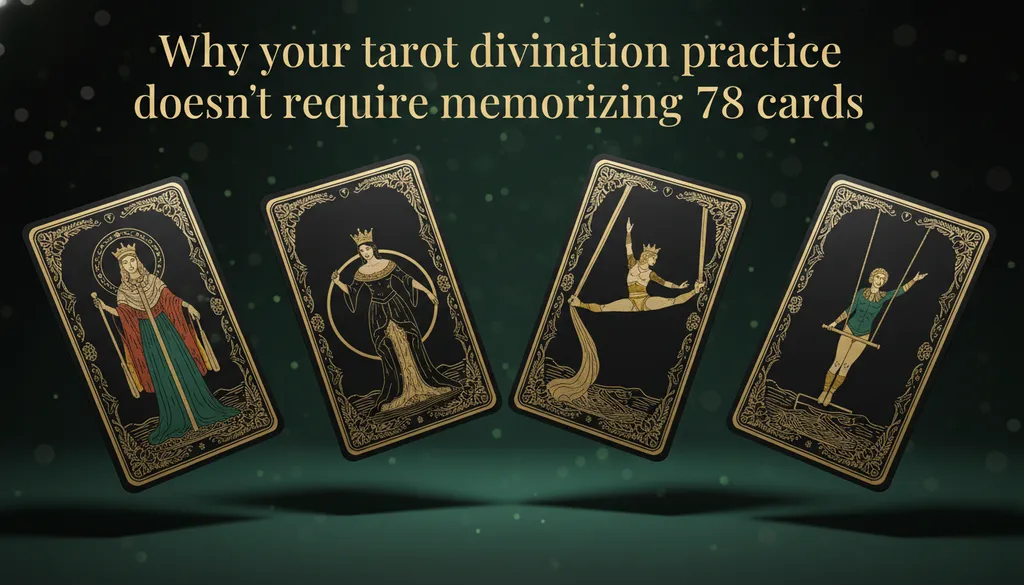
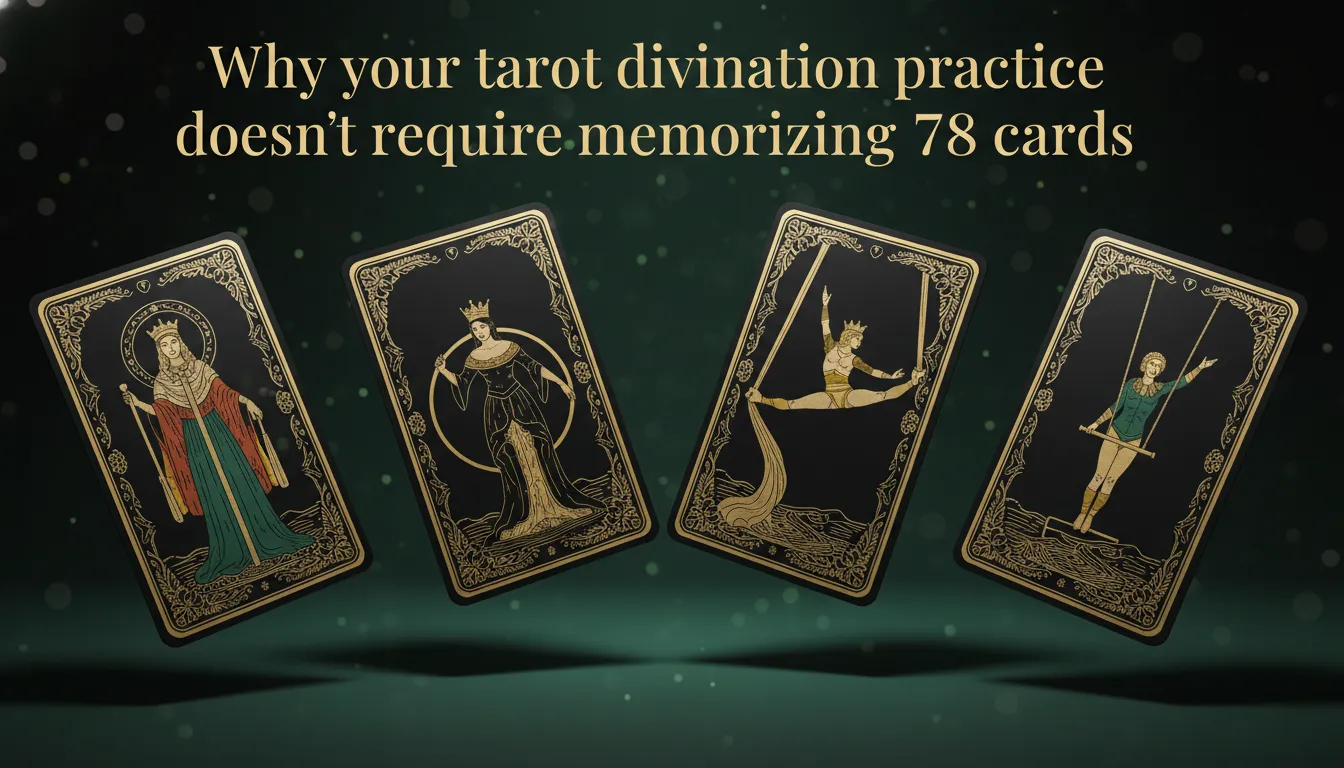
One creative approach is using movement-based decks, like the Hermetic Flight Tarot Deck, which transforms static imagery into dynamic, relatable stories. But whether you choose this path or stick with traditional decks, the key is consistent practice: pulling daily cards, journaling, and experimenting with small spreads. Over time, you’ll develop your own interpretations and trust your instincts.
You’re not failing if you’re struggling with memorization - it’s a common hurdle. Let go of the pressure, and remember: tarot is about connection, not perfection. Start small, trust yourself, and watch your practice grow.
5 Steps to Read Tarot Without Memorizing 78 Cards
Unlock Your Tarot Intuition: How to Stop Memorizing and Start Feeling the Cards
Practical Strategies to Read Tarot Without Memorization
Let go of the pressure to memorize card meanings and embrace strategies that tap into your intuition. These instinctive methods help you connect with the cards in a way that feels natural and meaningful, making your readings both personal and practical.
Set Your Intention Before Each Reading
Before you even shuffle the deck, take a moment to focus on your purpose. Brigit Esselmont of Biddy Tarot suggests a straightforward yet transformative exercise:
“Set the intention now that for your next 5 Tarot readings, you will not go anywhere near a book or a website or any form of Tarot resource except for your own inner wisdom.”
This practice encourages you to rely on your inner voice rather than external resources.
Gina Wisotzky of Incandescent Tarot highlights the importance of being emotionally centered:
“When emotions run high it is easy to miss the message of the cards… Take a walk, journal, nap, and return to the cards when you are centered and calm.”
Whether you’re reading for yourself or someone else, take a moment to ground yourself. This could mean journaling, stepping outside for fresh air, or simply pausing to breathe. If you’re reading for another person, say your intention out loud while shuffling to create a shared sense of focus and openness. These small steps align your energy and help you approach the reading with clarity.
Notice Your First Impressions
When you reveal a card, pay attention to your immediate reaction. The colors, symbols, and facial expressions on the card often hold more meaning than you realize. Take a moment to ask yourself: What stands out in this image? How does it make me feel? Does it remind me of anything in my life right now?
Write down every thought, no matter how small. For instance, if a card feels “peaceful” or “chaotic”, those impressions are valuable clues. As Wisotzky points out:
“Tarot is best used with an open mind, curiosity, and flexibility.”
Your gut reaction - whether it’s comfort, unease, or even confusion - forms the starting point for your interpretation. Trust that your instincts and intuitive abilities (whether you are aware of them or not) will guide you toward the message the card holds.
Tell the Story in the Card
Instead of searching for textbook definitions, focus on the story the card is telling. Look closely at the scene: Who are the characters? What are they doing? How do they interact? This narrative approach helps you draw meaning from the visual elements naturally.
Tie the story back to your question. For example, if you’re asking about a career decision and draw a card showing someone walking away from a structure, you might interpret this as a sign to leave something behind and explore a new opportunity. The imagery becomes a personal guide, offering insights without needing to rely on memorized meanings.
Making Tarot Personal
When you personalize your tarot readings, you take them beyond the surface level of memorized meanings and into a space of self-discovery. This approach strengthens your relationship with the cards and transforms the experience from a technical exercise into something deeply meaningful and reflective.
See Yourself in the Card’s Story
Imagine stepping into the card’s world - are you part of the scene, or are you observing from the outside? This simple shift in perspective can make the card’s message feel more immediate and relevant.
For instance, if you draw a card depicting someone crossing a threshold, ask yourself, “Am I that person? What am I leaving behind? What lies ahead for me?” These questions bring the card’s imagery into your personal context, making its message more relatable.
In 2022, Michael Abraham-Fiallos applied this method with the “Knight of Cups.” Instead of relying on traditional interpretations, he connected the card to his own battles with indulgence and social anxiety. Similarly, the “Four of Swords” led him to reflect on the importance of nurturing his chosen family. This personal engagement gave the cards a deeper, more impactful meaning.
Use Cards for Self-Reflection
Think of tarot as a mirror reflecting your inner world - your emotions, beliefs, and responses. After drawing a card, take 10 to 15 minutes to journal your initial reactions. Prompts like “What caught my attention first?” or “What does this remind me of?” can help you connect the card’s imagery to your current feelings or experiences.
Madhavi Ghare illustrated this idea in 2011 with the “7 of Swords.” Rather than sticking to its traditional association with deceit, she crafted a personal narrative that redefined the card. To her, it represented someone independent, inventive, and comfortable working alone. This reinterpretation allowed her to see the card as multifaceted, uncovering layers beyond its standard meaning.
After you’ve interpreted a card, ask yourself, “Does this feel true for me?” If it resonates, you’re likely on the right path. If it doesn’t, consider flipping the perspective - an inverted card might not mean the opposite but could reflect a blocked or unrealized potential. This way, every reading becomes a meaningful dialogue with yourself, helping you build confidence through consistent practice and personal insight.
Tools and Resources That Support Intuitive Practice
When it comes to building your intuitive tarot practice, the right tools can make all the difference. They’re not there to replace your instincts but to ease the learning curve and give you a solid foundation. With the right resources, you can focus more on connecting with the cards rather than stressing over memorization. Below, let’s explore some practical tools to help sharpen your intuitive connection.
Learn Patterns in Suits, Numbers, and Archetypes
Instead of trying to memorize the meaning of all 78 cards, focus on recognizing the patterns that tie them together. Each Minor Arcana suit corresponds to an element and a particular area of life. For example:
- Torches are linked to Fire, representing creativity, passion, and taking action.
- Cups connect to Water, symbolizing emotions and relationships.
- Swords align with Air, addressing thoughts, communication, and mental challenges.
- Pentacles correspond to Earth, dealing with material concerns and practical matters.
These elemental associations, combined with the numerical progression of each suit, create a framework that makes interpretation feel more natural. For instance, pulling the Seven of Torches instantly brings to mind Fire’s dynamic energy and its role within the suit’s broader story. This way, you’re not just reading a single card - you’re tapping into its place within a larger narrative.
Keep Guidebooks and Apps Nearby
Guidebooks and tarot apps are invaluable companions, especially when you’re still finding your footing. They offer detailed explanations of symbolism, help you cross-check your intuitive impressions, and deepen your understanding of the cards. Many apps even include journaling features, allowing you to document readings, jot down personal insights, and track how the cards resonate with your experiences over time. This combination of structured reference and personal reflection builds familiarity without forcing you into rote memorization.
Try Movement-Based Decks
Some tarot decks go beyond traditional imagery to create a more interactive experience. The Hermetic Flight Tarot Deck, for instance, features 21 real aerial performers who embody tarot archetypes through movement. This approach transforms the cards into living, breathing stories that you can connect with on a physical and emotional level. Rather than simply analyzing symbols, you feel the energy of the card come to life, making it easier to interpret its message as part of a flowing narrative. Movement-based decks like this invite you to engage with the cards in a way that feels both intuitive and deeply personal.
Building Confidence Through Practice
Now that you’ve explored practical resources, it’s time to focus on strengthening your intuitive skills through consistent practice. Confidence in tarot reading doesn’t come from memorizing card meanings but from showing up regularly and learning to trust what you feel and see. As Brigit Esselmont wisely states:
“The key to being a fully confident Tarot reader is to practice, practice, practice”.
The more you engage with your cards, the stronger your intuitive guidance becomes.
Pull One Card Daily
Begin your day with a single-card pull before diving into your phone or daily tasks. This small but impactful habit helps you connect with your intuition and sets a reflective tone for the day. Choose a deck that resonates with you, draw one card, and pay attention to your first impressions - whether it’s a color, gesture, or feeling that stands out. Joy Vernon highlights the benefits of this practice:
“A daily tarot practice makes you a better reader, keeps you oiled, and develops your spiritual muscles. You gain knowledge, confidence, and trust in your self and your readings. Intuition blooms”.
This daily ritual not only eases anxiety but also deepens your relationship with the cards, encouraging them to “speak” to you in ways that go beyond textbook definitions. It’s a simple yet powerful way to build trust in your personal impressions.
Try Simple Three-Card Spreads
Once you’re comfortable with single-card readings, expand your practice by trying a three-card spread. This method offers just enough complexity to explore how cards interact without feeling overwhelming. Tailor the spread to your needs - whether it’s Past-Present-Future, Situation-Problem-Action, or What You Think-What You Feel-What You Do. Set a clear intention before shuffling, then lay out the cards and take in the imagery. Look for connections between the cards and weave them into a narrative. This approach emphasizes understanding the relationships between cards rather than relying solely on memorized meanings. Over time, this practice will naturally create a personal archive of insights.
Keep a Tarot Journal
Documenting your readings is an invaluable way to deepen your understanding. Write down each card, your immediate reactions, and any personal reflections. Over time, you’ll start to notice patterns - recurring cards, emotional themes, and insights that reveal deeper truths. Terri Connellan encourages this practice, saying:
“Probably the best way to develop an intuitive practice is to just dive in and start! Choose a deck that calls you. Draw a card each day, whether it be oracle or tarot. See what comes up, make notes in a tarot journal about what you notice and intuitively feel from the card”.
Your tarot journal becomes a unique reference guide, tracking your progress and validating your intuitive growth. It’s especially helpful during challenging times, offering a reminder of how much you’ve learned and how far you’ve come.
Conclusion
Reflecting on the strategies we’ve explored, it’s clear that a fulfilling tarot practice doesn’t hinge on memorizing all 78 cards. Instead, the heart of effective readings lies in trusting your intuition and forming a personal bond with the cards. Brigit Esselmont, Founder of Biddy Tarot, captures this sentiment perfectly:
“You see, when you focus simply on memorizing the Tarot card meanings, you completely miss the opportunity to create a personal and intuitive connection with the Tarot cards. And you lose the chance to tap into the deeper spiritual wisdom that makes the Tarot truly special”.
A successful reading balances logic with creativity. By tuning into your first impressions, weaving the imagery into a story, and relating the cards to your own life, you unlock insights that no guidebook alone can offer.
To deepen your practice, revisit the steps we discussed: pull a daily card to reflect on, experiment with three-card spreads, and keep a journal to track your thoughts and discoveries. Guidebooks and apps are there to support you, not define your readings. For those drawn to dynamic imagery, the Hermetic Flight Tarot Deck offers an alternative perspective with its movement-based designs.
Ultimately, trust your intuition; it’s what makes your tarot journey uniquely yours. Shifting your focus from rote memorization to intuitive connection allows your practice to flourish in a way that feels natural and meaningful.
FAQs
×
How can I develop and trust my intuition during tarot readings?
Before diving into your reading, create a peaceful and centered space. You can do this by practicing meditation, grounding techniques, or simply setting a clear intention for what you hope to gain from the session. (Our founder has co-written a reiki infused meditation album with Zachariah Grace called Awaken. It is a magical companion for meditative practices.) When you start pulling cards, take a moment to absorb the details - the symbols, colors, and imagery. Let your initial impressions flow naturally without trying to analyze them too much. Allow yourself to slip into a flow state.
Make it a habit to practice consistently, and consider keeping a journal to jot down your intuitive thoughts and any recurring patterns you notice. Over time, this reflective process will help you feel more confident and connected to the cards. Remember to trust your gut - your first reaction often holds the most meaning.
×
How can I start reading tarot without memorizing all 78 cards?
Start with easy, manageable steps, like drawing a single card each day. Spend time observing the imagery and symbols, and consider how they connect to your personal experiences or emotions. Jot down your thoughts in a journal - this process helps you tune into your intuition without feeling overwhelmed. As you get more comfortable, you can slowly explore traditional interpretations to enrich your understanding, but there’s no pressure to memorize everything right away. Resources like guidebooks or tarot apps can be great companions, offering guidance as you grow more confident in your readings.
×
How can I make my tarot readings more personal and meaningful?
To bring a more personal touch to your tarot readings, take time to truly engage with the cards. Study the imagery, notice the symbols, and pay attention to the emotions they stir within you. Let your intuition take the lead as you interpret them. Think of the cards as telling a story - one that connects directly to your specific question or situation. This approach makes the reading feel more relevant and deeply connected to your life.
Another way to make your practice uniquely yours is by incorporating tools that feel meaningful to you. This could be a favorite guidebook for reference or a journal where you jot down your thoughts and discoveries. Over time, these habits can help you develop a deeper relationship with the cards, moving beyond rote memorization to create readings that feel natural and insightful.